




My journey to greener parenting as a sustainability professional and mom

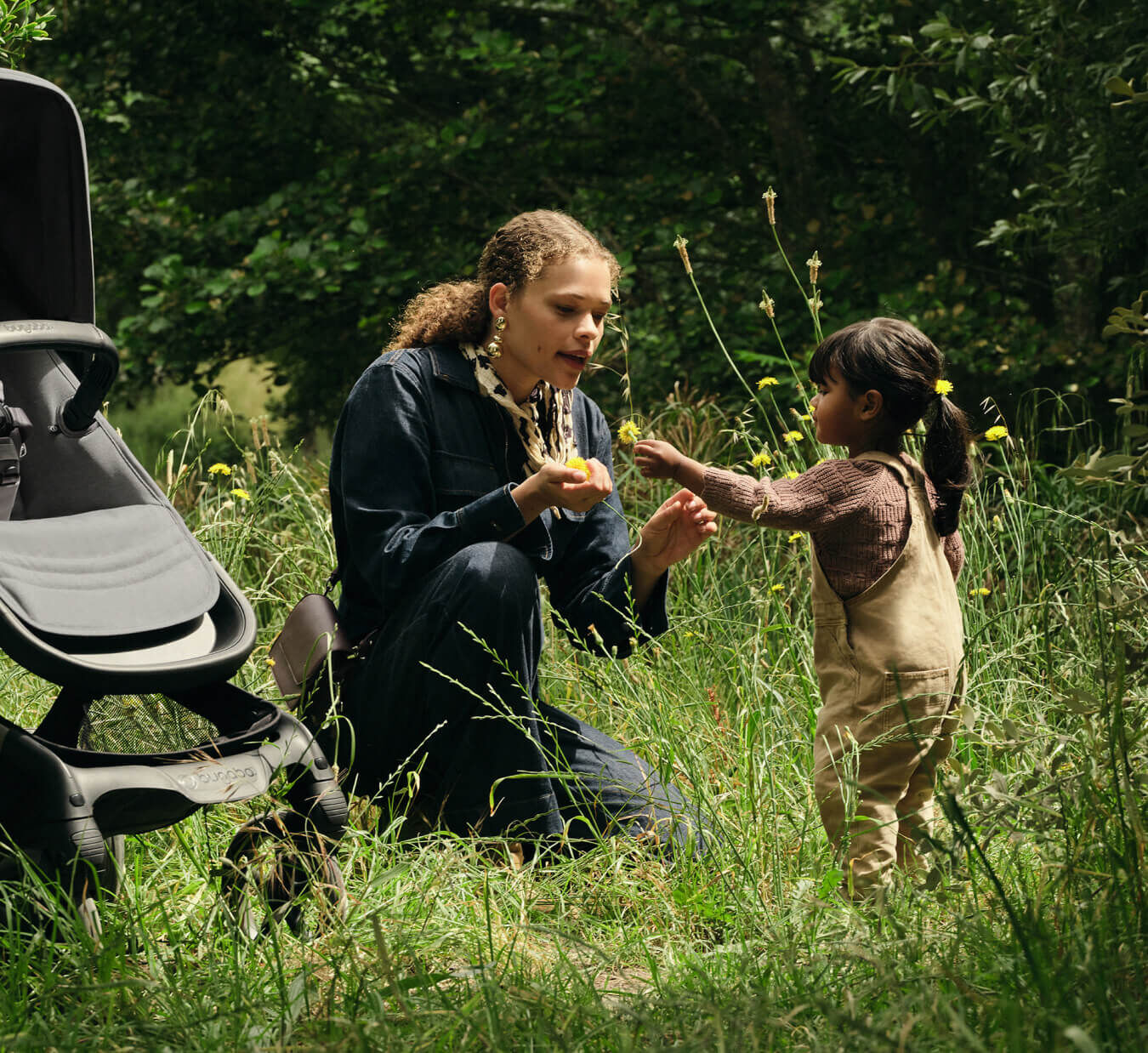
When I first became a parent, being eco-friendly honestly wasn't my top priority. I was too busy navigating a whole new world of challenges, sleepless nights, and unknowns. But as Bugaboo's Sustainability Manager and a mum of three, I've learned that raising a family and caring for the planet don't have to be mutually exclusive. In fact, a few simple switches can make a massive difference.
Here is what I’ve discovered about environmentally conscious parenting and how you can apply these principles to your own family life.
Why eco-friendly parenting matters
With each baby's arrival, I found myself thinking more deeply about the world we were welcoming them into. I wanted to protect the planet so my kids—and future generations—could inherit a world where they can truly thrive.
That's why I knew I needed to plant the seed early. I wanted to teach our children that we're all part of nature and responsible for caring for our shared home. I've discovered that nothing works better than leading by example. Children are incredible mimics; if they see you valuing nature and making conscious choices, they’ll naturally do the same.
However, my work in sustainability has also shown me how complicated it can be. There's often a downside or unintended consequence to consider with every "sustainable" choice. It’s easy to get bogged down in "eco-guilt" or analysis paralysis.
So, my golden rule became: Don't be too hard on yourself.
Perfection isn't the goal. We don’t need a handful of parents doing sustainable parenting perfectly; we need millions doing it imperfectly. Do what you can, in ways that fit your lifestyle. I focused on small actions that felt both achievable and meaningful: buy less, buy better, and care for what I have so I can eventually pass it on to someone else.
Creating a sustainable nursery: Less is more
When I was expecting, I thought carefully about what I would actually need once the baby arrived. The baby industry is full of gadgets and "must-haves" that often end up gathering dust. To save money and reduce waste, I reached out to my parent friends to ask what items were truly essential and what was just hype.
Their honest answers helped me curate a minimalist nursery that had everything we needed and nothing we didn't. This approach isn't just about saving space; it's about mindful consumption. Before buying anything new, ask yourself: Do we really need this? Is there a reusable alternative? Can I get this second-hand?
Renting, sharing, and the circular economy
I realised most baby furniture is only useful for a few months. A crib, a changing table, a bassinet—they have such short lifecycles in a child’s life.
We bought a lot second-hand, which significantly reduced our carbon footprint. But nowadays, there are also brilliant rental companies out there that can loan everything from cots to carriers. In the UK, subscription services and rental platforms are becoming increasingly popular, allowing you to access premium gear without the long-term commitment or waste.
I also leaned on my community by borrowing pieces from friends that they no longer needed or were storing for a future baby. There is something lovely about using a piece of furniture that has already held a friend’s sleeping baby.
When I did buy new, I looked for pieces that could grow with my baby. I'm biased, of course, but the Bugaboo Giraffe is a prime example. It adapts through every stage, transforming from a newborn set to a high chair, and eventually into a dining chair for an older toddler or even an adult. Investing in modular, adaptable furniture means you buy once and use it for a lifetime.
Dressing the part: Clothes that don't cost the earth
My babies grew so fast, especially as newborns. In the blink of an eye, they outgrew every piece of clothing I’d got for them. Buying brand new wardrobes every three months felt wasteful—both financially and environmentally.
Embracing pre-loved fashion
I looked for second-hand baby clothes and found some great brands on apps like Vinted and Depop for a fraction of the high street price. The "pre-loved" market is thriving, and it’s one of the easiest ways to practice sustainable parenting. I embraced hand-me-downs and passed items along to my friends whenever my kids outgrew something. It keeps clothes in circulation and out of landfill.
Choosing better materials
If I had to buy new, I prioritised quality over quantity. I looked for high-quality pieces made from comfortable natural fibres—like organic cotton, linen, and wool—that were less irritating for my baby's skin.
I also shopped for mono-materials. Clothing made from a blend of fabrics (like a cotton-polyester mix) is notoriously difficult to recycle. Pure materials, however, can be easily recycled when they're finally worn out.
Trusted certifications
Greenwashing can be a problem in the fashion industry, so I kept an eye out for trusted trademarks to help me spot more ethically made clothing:
- B Corp™: Shows a company meets high standards of social and environmental performance.
- OEKO-TEX®: Guarantees the fabric is free from harmful chemicals.
- EU Ecolabel: Recognises products with low environmental impact.
- BCI Cotton™ (Better Cotton Initiative): Ensures cotton is produced more sustainably.
Playtime: Feeding imagination, not landfill
From my experience, I found that my babies and toddlers were infinitely more interested in what I was doing than any of their toys. My kids liked—and still do—to join in on whatever I was up to.
I let them help out with safe household tasks instead of distracting them with flashy plastic toys. Even though it can be inconvenient and tiring at times (everything takes twice as long!), involving them really supports their learning and development. It teaches them life skills and makes them feel capable.
Toy rotation and natural materials
When I did want a new addition for their toybox, I tried toy-lending schemes to mix things up. Toy libraries are a fantastic resource, allowing your children to enjoy "new" toys every few weeks without the clutter or waste.
When buying new, I looked for natural materials like responsibly sourced wood or natural rubber, and went for the best quality I could afford. I also chose versatile toys with open-ended possibilities—like building blocks or nesting cups—to expand their imagination. A simple wooden block can be a car, a phone, or a piece of cheese depending on the day. These toys last longer and spark more creativity than battery-operated gadgets that only do one thing.
Letting nature into our family’s routine
In the Netherlands, we have what is called "The Scouts’ Law" (Scoutingwet), which is very similar to the Scout Law used in the UK. It’s all about caring for nature and taking responsibility from a young age, and in our family, we really have embraced it.
One of the guiding ideas that stuck with me is: "Leave a place better than when you found it."
I try to live by that every day. We look after our things, fixing and reusing instead of throwing away, and I show my kids how small actions can make a big difference. It might be picking up litter on a walk or simply ensuring we don't damage plants when we play in the woods.
We try to spend as much time outside together as we can. It doesn’t have to be a big adventure; sometimes it’s just a camping weekend or a welly-walk through a local nature reserve. Being outdoors helps us slow down and de-stress. Most importantly, it helps us feel connected to nature. You protect what you love, and by helping my children fall in love with the natural world, I hope they will grow up wanting to protect it.
Why I picked a Bugaboo pushchair: A leader in sustainability
Of course, I am very biased when it comes to pushchairs, but Bugaboo is, and always will be, my first choice—and for good reasons.
Our product designers and engineers build upon more than two decades of experience to create timeless designs that last. We design our pushchairs so that single parts can be repaired, replaced, and recycled. This "design for disassembly" philosophy helps them stay on the road for as long as possible. Seeing a first-generation Bugaboo Frog or Cameleon still in use on the streets of London or Amsterdam always makes me proud.
Conscious materials
We’re committed to using materials with the lowest possible environmental impact. We are transitioning to bio-based materials (plastics made from renewable resources like upcycled vegetable waste) and using recycled fabrics and low-carbon aluminium. We maintain strict chemical standards to ensure everything is safe for your baby and better for the planet.
Social responsibility
Sustainability isn't just about carbon footprints; it's also about people. We uphold high standards for health and safety in our factory and ensure fair, living wages for our workers—because that's how it should be.
All of this comes without compromising on performance or style. My Bugaboo pushchair is still the smoothest ride out there, and it looks great, too!
Final thoughts
Becoming a parent changes everything. Suddenly, the future isn't just an abstract concept; it's where your child will live. But with so much already on your mind, you don’t need the extra pressure to "do it all perfectly."
Our goal at Bugaboo is to make environmentally conscious parenting feel realistic, supportive, and truly helpful in everyday life. By focusing on long-lasting quality, responsible materials, and caring for the people behind every product, we’re committed to creating meaningful change.
It’s about making choices today that support your family now, while also protecting the world your children will grow up in. Start small, choose well, and enjoy the journey.