




5 ways you can maximize your sleep as a new parent

%201%20(1)%201%20(2).png?sw=928)
Understanding newborn sleep biology
Before improving your own sleep, it helps to understand your baby’s. It's easy to get frustrated when your little one wakes up every two hours, but biologically, it’s exactly what newborns are designed to do.
Babies aren’t born with a circadian rhythm. After nine months in their mother's womb, a dark, constantly moving environment, day and night mean very little. Adding to that, their stomachs are tiny, roughly the size of a cherry at birth. This means they physically need to eat frequently to fuel their rapid growth.
The sleep cycle difference
Adults move through 90-minute sleep cycles and often wake briefly without noticing. Newborns, however, have a much shorter cycle, about 45 to 50 minutes. They spend more time in light, active sleep, which is vital for brain development. Because of this, any hunger or discomfort can wake them fully.
1. Master the day-night rhythm
Helping your newborn develop an internal clock is one of the most effective ways to improve sleep. Act as their external timekeeper. Use light, sounds, and activity to show when it’s time to be awake and when it’s time to rest. Don’t keep things dark and quiet all day, as that can confuse your baby. Make daytime and nighttime feel clearly different.
Set the tone for daytime
Wake up at the same time every day and open the curtains right away. Step outside with your baby to soak in the morning sunlight, as this can help boost their mood and energy. Keep usual household sounds going, let naps happen where everyone gathers, and interact with your baby as soon as they wake up. This sparks their curiosity and helps them feel active during the day.
Curate the evening atmosphere
About two hours before bed, start winding things down. Dim the lights, close the curtains, and keep noise low. Turn off screens and skip loud music. This helps your baby sense it’s time to rest. At night, keep feeding time calm and quiet. If you need a nightlight, use a red one. Change and feed your baby quickly, and skip any play or chatter. When you stay consistent, your baby learns that nights are for sleep. In time, you’ll notice longer stretches overnight.
2. Implement a shift system
The old advice "sleep when the baby sleeps" sounds helpful, but rarely works in practice. It assumes you can fall asleep on command the moment your baby closes their eyes, multiple times a day. A more realistic approach is to divide the night into shifts between two parents, so both get a protected block of uninterrupted sleep.
The four-hour minimum
Adults require at least four to five hours of continuous sleep to function well. Fragmented sleep quickly leads to brain fog, irritability, and a higher risk of postpartum mood disorders.
Try dividing the night into two:
- Shift A (9:00 PM - 2:00 AM): One of you heads to a quiet room to sleep (with earplugs, if needed). The other stays for baby duty.
- Shift B (2:00 AM - 7:00 AM): The sleeping parent wakes up and takes over. This way, each of you is less exhausted and better able to enjoy these early days.
Making it work with breastfeeding
Even if you're breastfeeding, it shouldn't mean you're doing nights alone. If bottles are an option, your partner can handle a full feed while you sleep. If not, they can manage everything else: changing, bringing the baby to you, then handling burping and soothing after. Less time awake makes it easier to fall back asleep and keeps nights feeling like teamwork.
3. The power of the pause
It's natural to want to rush to the bassinet at the first sound of a whimper. However, moving in at the very first sound can sometimes disrupt sleep rather than protect it.
Remember, newborns are noisy sleepers. They squirm, grunt, cry out, and flutter their eyelids even while they are sound asleep. If you pick them up the moment they make a noise, you might actually be waking them up from a perfectly good nap.
Observe before acting
French parents use something called "Le Pause." It means taking a moment to watch and listen to your baby, not ignoring them. When your baby cries at night, pause first. Listen. Are they settling back down, or is something wrong? These pauses give your baby the chance to connect sleep cycles and start learning how to self-soothe. If the crying gets louder or changes, step in. This simple habit can lead to better sleep for everyone and encourages your baby’s independence, too.
4. Create a portable sleep sanctuary
If travel is part of your family life, sleep routines need to move with you. The key is creating sleep associations that aren’t tied to one room or crib. Rather than relying on a fixed setup, anchor their sleep to objects and sensory cues that are easy to pack and recreate anywhere.
The essential toolkit
- Sound machine: A white noise mimics the sounds your baby heard in the womb and helps them relax. It also blocks out sudden noises (like a barking dog or city traffic) so your baby can sleep better anywhere.
- Swaddles and sleep sacks: These items give your baby a clear signal that it’s time to sleep. They keep your little one from waking themselves with the startle reflex and help them feel safe.
- Scent: Sleep with the crib sheet for a night before putting it on the mattress. This makes the sleep space smell like you, making a strange environment feel familiar.
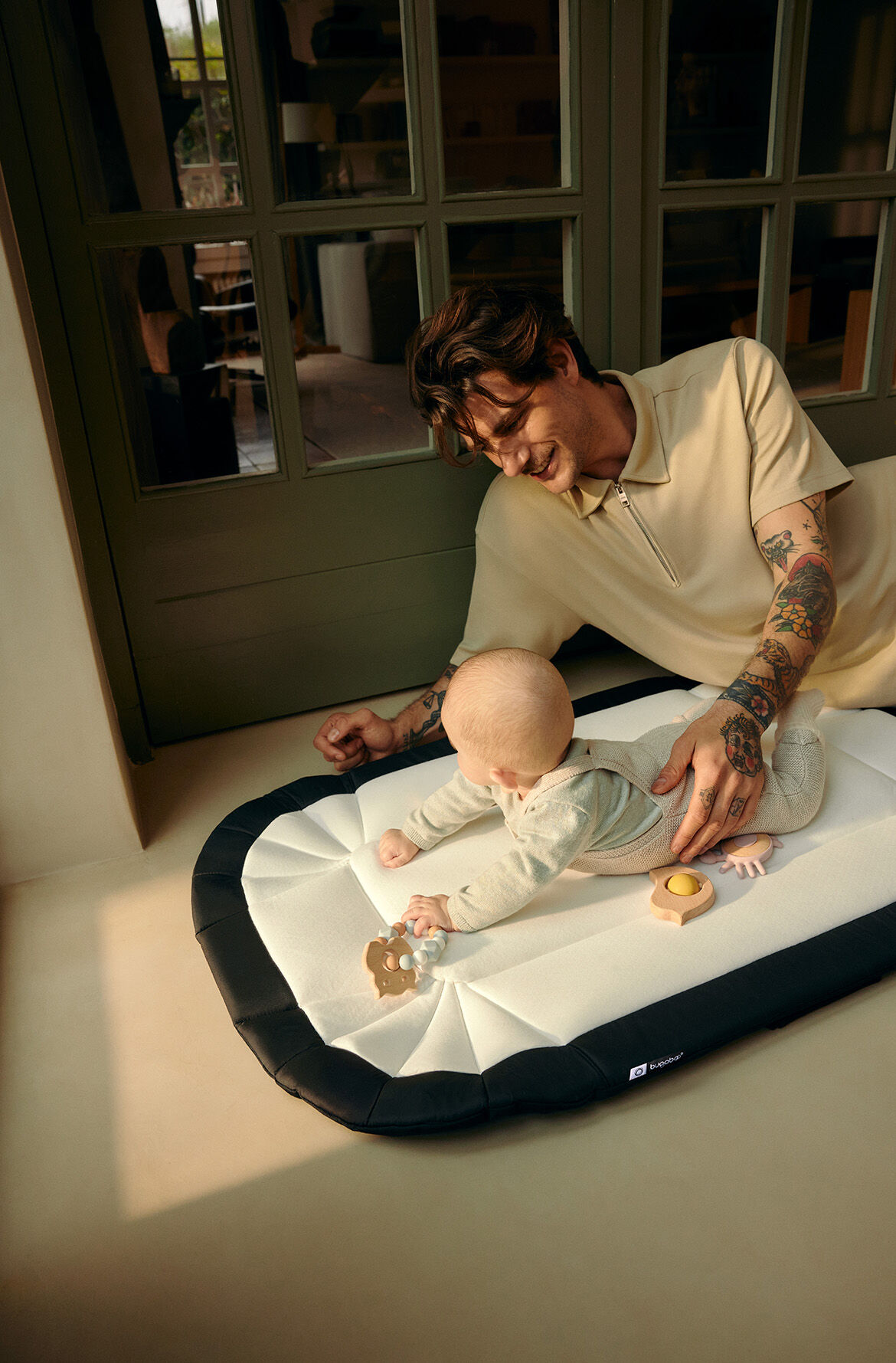
- Portable cot: A lightweight cot, like the Bugaboo Stardust, folds out in seconds. It works as a safe play area at home and as a travel cot while you're on trips. Your baby gets to rest in a space that feels safe and familiar, making naps and bedtime less stressful wherever you go.
Consistency over location
Those same cues — white noise, the sleep sack, your scent — work wonders at home and on the go. When you travel, bringing these familiar items keeps your baby’s sleep routine consistent, even in new places.
5. Rest on purpose and choose what matters
Getting more sleep isn’t just about what you do at night. It starts with how you manage your energy during the day. As new parents, you’ll feel pressure to “bounce back” or keep everything perfect.
Let that go. Now’s the time to rethink what matters most. Saving your energy for yourself and your baby matters more than checking off every little task.
The art of the power nap
If you can't get eight hours at night, you need to make up for it during the day. Napping is a skill, and even 20 minutes can reset your nervous system and restore focus.
If sleep doesn’t come easily, try Non-Sleep Deep Rest (NSDR) or yoga nidra. These guided relaxation practices offer deep physical and mental recovery without fully falling asleep. Lie down, close your eyes, and listen to a 10-minute guided track. It’s effective, efficient rest, designed for small windows of time.
Lowering the bar
Making space for rest means letting go of the non-essential. Here are a few tips:
- Outsource what you can: If you have the means, hire a cleaner or use a laundry service.
- Automate: Order your food shopping online. Set up subscriptions for nappies and wipes.
- Say no: Decline social invitations that drain you.
- Accept help: When friends ask, "Is there anything I can do?", give them a specific task. "Yes, could you pick up dinner?" or "Could you hold the baby for an hour while I shower and nap?"
This isn’t about doing less. It’s about conserving energy. By prioritising your sleep and health now, you're building the resilience you need to be the present, engaged, and fun parents you want to be.
Moving forward with confidence
There’s no shortcut to newborn sleep. It's a process. Still, when you understand your baby’s needs and apply thoughtful strategies, rest becomes more achievable. This phase won’t last forever. By teaching self-soothing and healthy sleep habits now, you set your child up for lifelong good sleep. Trust your instincts, stay flexible, and take care of yourself. You and your baby both deserve to feel well-rested.